What These Smaller and Specialized Models Really Are
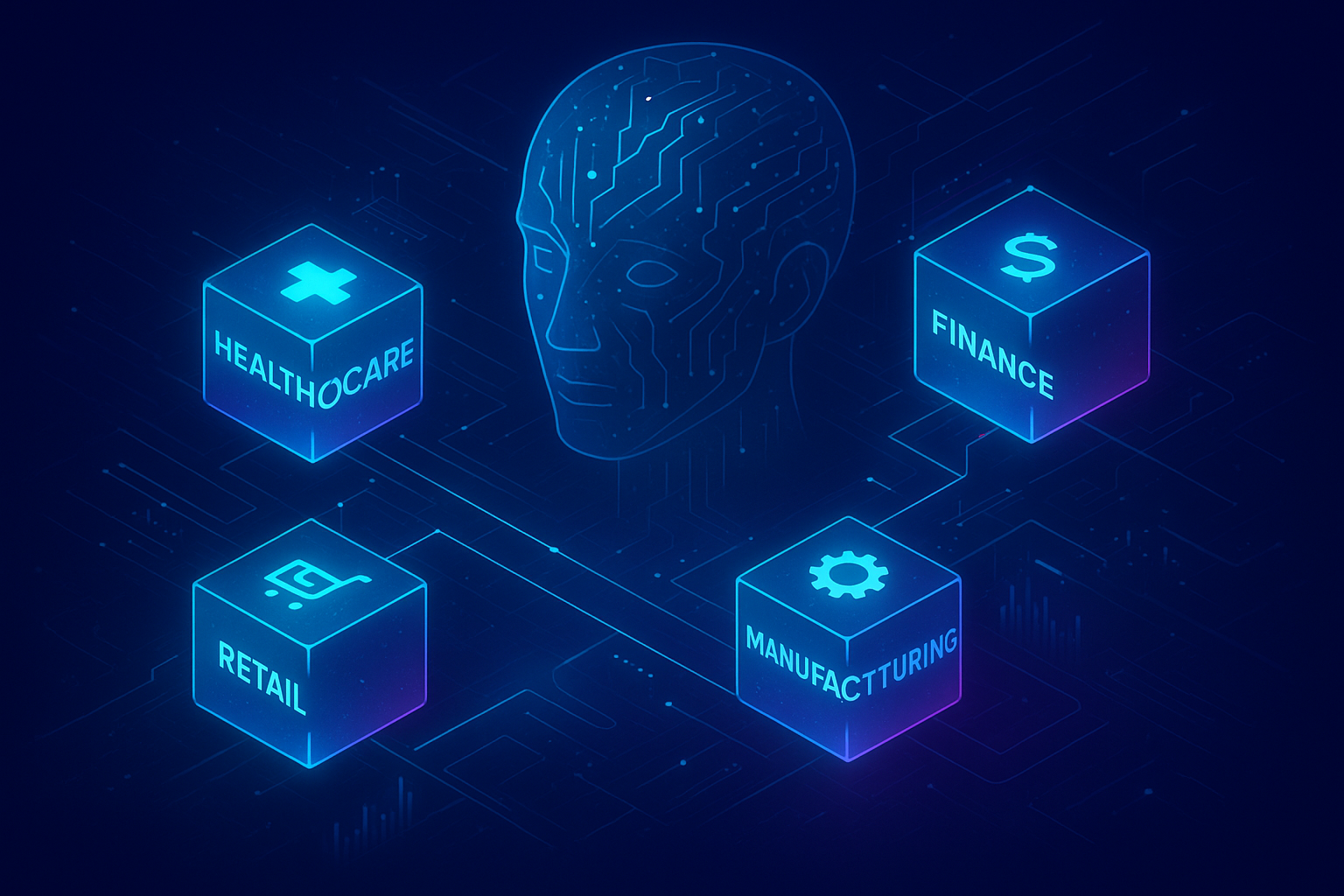
It is not necessary for every business to have large AI models today. A lot of businesses have decided to use small AI models, which are trained to be able to solve one specific problem. These models are called domain-specific, as they serve only one area of application, e.g., medicine, banking, retail, or manufacturing.
Similarly, fine-tuned smaller models start as typical models but are trained further with the company’s data. This eventually leads to the model being highly precise for one particular purpose only, i.e., customer support, fraud detection, or product recommendations.
Why Businesses Prefer Smaller AI Models
Minimal models are spreading their wings, as they are capable of doing only one thing excellently. In contrast to big models, no attempt is made to understand comprehensively all aspects, which is what big models do. They are more efficient in handling a certain job, which makes them quicker, more cost-effective, and more trustworthy.
By way of illustration, a small AI learning only from medical data would generate better medical predictions than a large model trained on general information.
Faster, Cheaper, and Easier to Train
What makes a smaller model very attractive is the fact that it does not require large servers or costly hardware. Small models can be quickly trained, easily updated, and used by businesses of any size.
As these models are less demanding in terms of resources, companies save money and at the same time achieve excellent results.
Better for Privacy and Safety
There are industries that have to keep their data confidential. Medical, banking, and legal sectors cannot always provide sensitive data to large cloud-based models.
Smaller models can be trained locally on private data and the inferences can be performed by a company’s own hardware. This undoubtedly makes them less vulnerable and more compatible with data protection regulations.
Perfect for Devices Like Mobiles and IoT
With less complex AI models, they are basically portable, which implies that they can be operated directly on any common device, for example:
- mobile phones
- monitoring devices
- internet-connected home appliances
- factory machines
This makes it possible for AI to function at the exact moment when it is needed, and, hence, there is no need for an internet connection. Consider a smart camera that can immediately spot a defect on a production line by the use of an on-device model.
Easy to Customize for Any Business
No two businesses are operated in the same way, therefore, one model could not fit all requirements. Fine-tuning of models gives enterprises the opportunity to further train AI by their data, and then the AI will know:
- their customers
- their workflows
- their industry terms
The final effect is having more accurate predictions and improved performance.
Examples of How These Models Are Used
Major corporations around the world leverage small, specialized AI models to accomplish:
- scanning and comprehending law-related documents
- discovery of fraudulent bank transactions
- product suggestion on e-commerce platforms
- diagnosing diseases from medical images
- identifying defects in manufacturing goods
Such models are very focused, trustworthy, and designed for practical work.
Why This Trend Is Growing Quickly
It is a myth that big is always better which companies do not believe anymore. What they want now are models that cater to their requirements and not vice versa.
Domain-specific and fine-tuned small models have the following benefits:
- accuracy
- speed
- privacy
- low operating cost
- easy deployment
This is the reason why this is one of the most significant AI trends in 2025 and the subsequent years.
