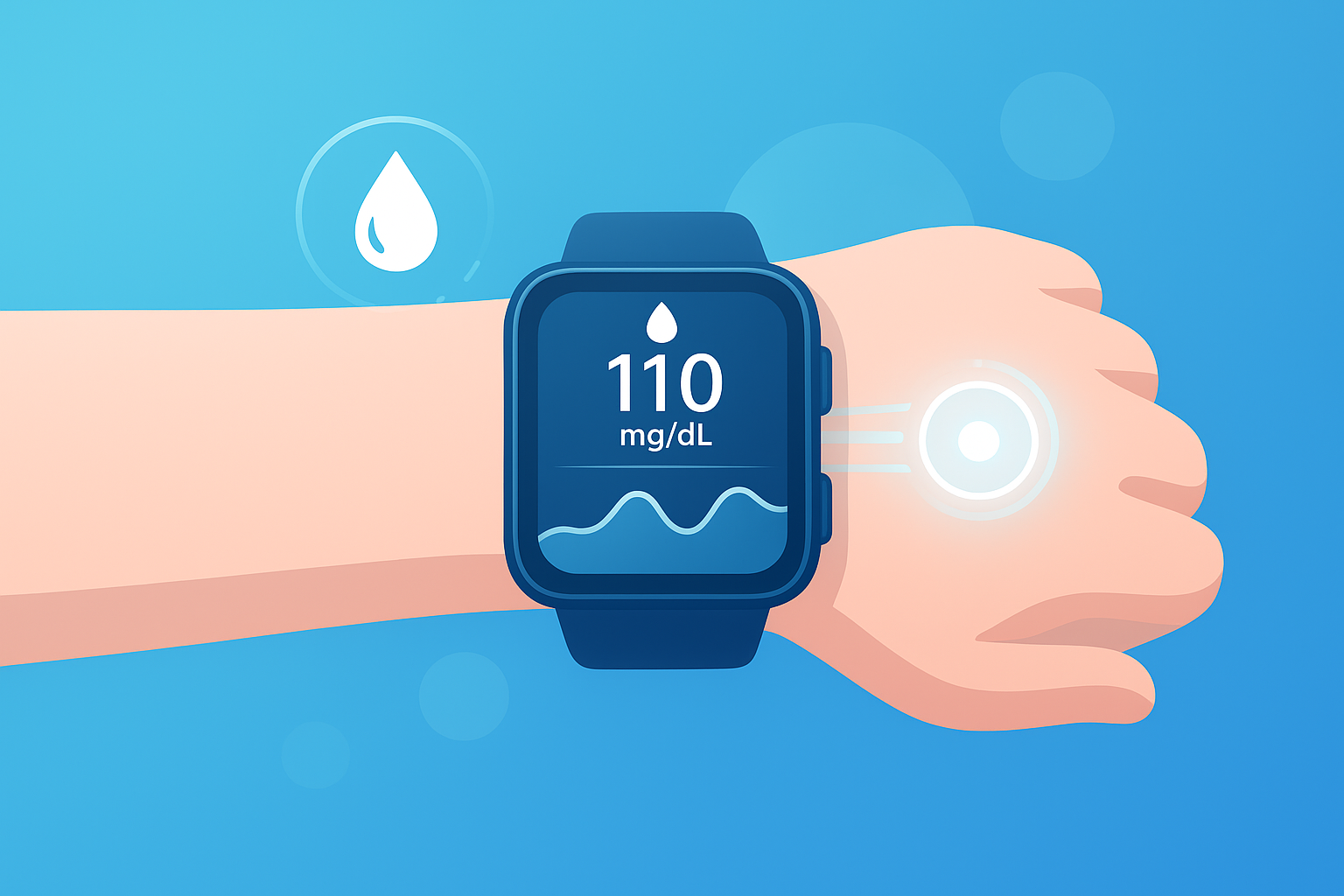
Smartwatch Blood Sugar Monitoring: How Accurate Is It Really?
Modern smartwatches can track many health metrics, and now some models even claim to estimate blood sugar levels. This sounds exciting, especially for people who want easier health tracking. But the big question is: How accurate are these readings?
Let’s break it down in the simplest way.
How Smartwatches Try to Measure Blood Sugar
Smartwatches do not collect real blood samples. Instead, they use special sensors that scan your skin using:
- Light-based technology
- Infrared signals
- Skin and sweat analysis
These sensors try to understand changes under the skin and then estimate glucose levels. It is important to remember that this is only an estimate, not a true medical measurement.
Why Smartwatch Glucose Readings Are Not Fully Accurate
Smartwatches are still not as precise as medical tools like finger-prick glucometers or Continuous Glucose Monitors (CGMs). That’s because many outside factors can affect the reading, such as:
- Body temperature
- Skin type
- Sweat and hydration
- Movement
- Lighting
Because of these factors, smartwatch readings can sometimes be higher or lower than your real blood sugar level.
Are Smartwatches Useful for People with Diabetes?
Right now, smartwatch blood sugar tracking is not reliable enough for diabetes management.
They cannot replace real medical devices and should not be used to make insulin or medication decisions.
However, they can still be helpful for everyday wellness and general trends. You can use them to understand how your body reacts to:
- Food
- Exercise
- Sleep
- Stress
But they should not be used for emergency or medical-level accuracy.
Tech Companies Working on Better Glucose Monitoring
Several major brands are researching more advanced, needle-free glucose tracking:
- Apple
- Samsung
- Fitbit
- Amazfit
- Ultrahuman
These companies aim to develop sensors that can give close-to-accurate readings, but this technology is still being developed.
What We Can Expect in the Future
Experts believe that smartwatches may offer much more accurate glucose tracking in a few years. With better sensors and AI analysis, future wearables may:
- Give real-time glucose readings
- Help monitor diabetes safely
- Reduce or avoid finger-prick tests
But this level of accuracy is still under progress.
Final Thoughts: Should You Trust Smartwatch Blood Sugar Tracking?
Smartwatch blood sugar monitoring is a great feature for wellness, awareness, and learning your body’s patterns.
But it is not advanced enough for medical use.
Good for:
- Lifestyle tracking
- Fitness insights
- Understanding general trends
Not good for:
- Medical decisions
- Insulin management
- Measuring exact glucose levels
For now, think of smartwatch glucose tracking as a helpful guide—not a replacement for medical devices.
