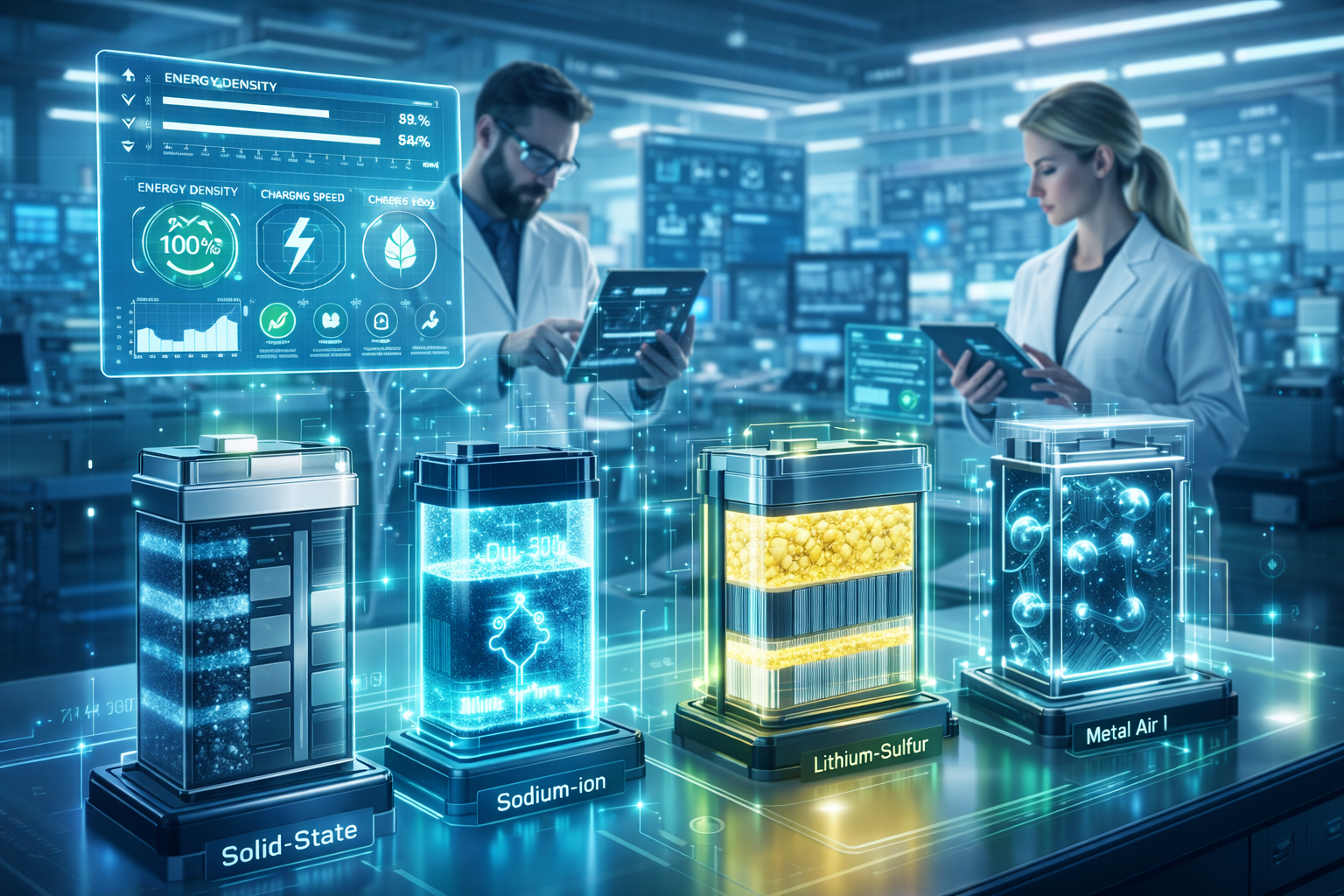
Engineering beyond lithium-ion involves the generation of new generations of batteries that perform better than traditional lithium-ion batteries. These advanced batteries are being targeted to have higher energy storage capacity, faster charging rates, long cycle life, and safer for everyday use in conventional applications.
Why New Battery Technologies Are Needed
For years, devices have been powered by lithium-ion batteries, and yet they certainly come with their own limitations. They tend to overheat, take a while to charge, and depend on materials that are costly and limited. Electric vehicles and renewable energy systems are on the rise, raising the need for better methods of battery solutions.
Solid-State Battery Technology
With solid-state batteries, the inside material is solid in nature. This makes them safer and less likely to generate a fire hazard. They can store more energy in a smaller space and are ideal for electric vehicles and high-performance electronics.
Sodium-Ion Battery Development
The use of sodium is widely available and low-cost in sodium-ion batteries. They can store a little less energy compared to lithium-ion batteries, but for large energy storage systems and even power grids, they are good options.
Lithium-Sulfur Battery Innovation
Compared to regular batteries, lithium-sulfur batteries are much lighter and can store more energy. Application in drones, electric aircraft, and other long-distance vehicles is appropriate. Their durability and lifespan are under improvement by engineers.
Zinc-Based and Metal-Air Batteries
Zinc-based and metal-air batteries use natural chemical reactions with air to generate power. As safe, affordable, and ecologically friendly units of storage, such batteries serve perfectly in backup power and renewable energy storage.
How Engineers Improve Battery Performance
Engineers build better batteries using advanced materials, AI, and smart design tools. These ensure a longer life for the battery, quicker charging time, and a marginally more efficient one.
Batteries and Clean Energy Systems
Modern batteries store most of the solar and wind energy being generated today. Advanced battery technologies help balance energy supply and demand, making clean energy a lot more reliable and widely usable.
Challenges in Advanced Battery Engineering
New battery technologies come with a variety of challenges in terms of high production cost, limited manufacturing capacity, and lengthy testing times. All these issues are supposed to be resolved before the batteries can find widespread applications.
The Future of Battery Engineering It will ensure the future of electric transportation, renewable energy, and smart devices with battery engineering going beyond lithium-ion. These batteries will be increasingly affordable, safer, and more powerful as research continues.
