Introduction
Automation is not just transforming factories and warehouses — it’s reshaping operating rooms.
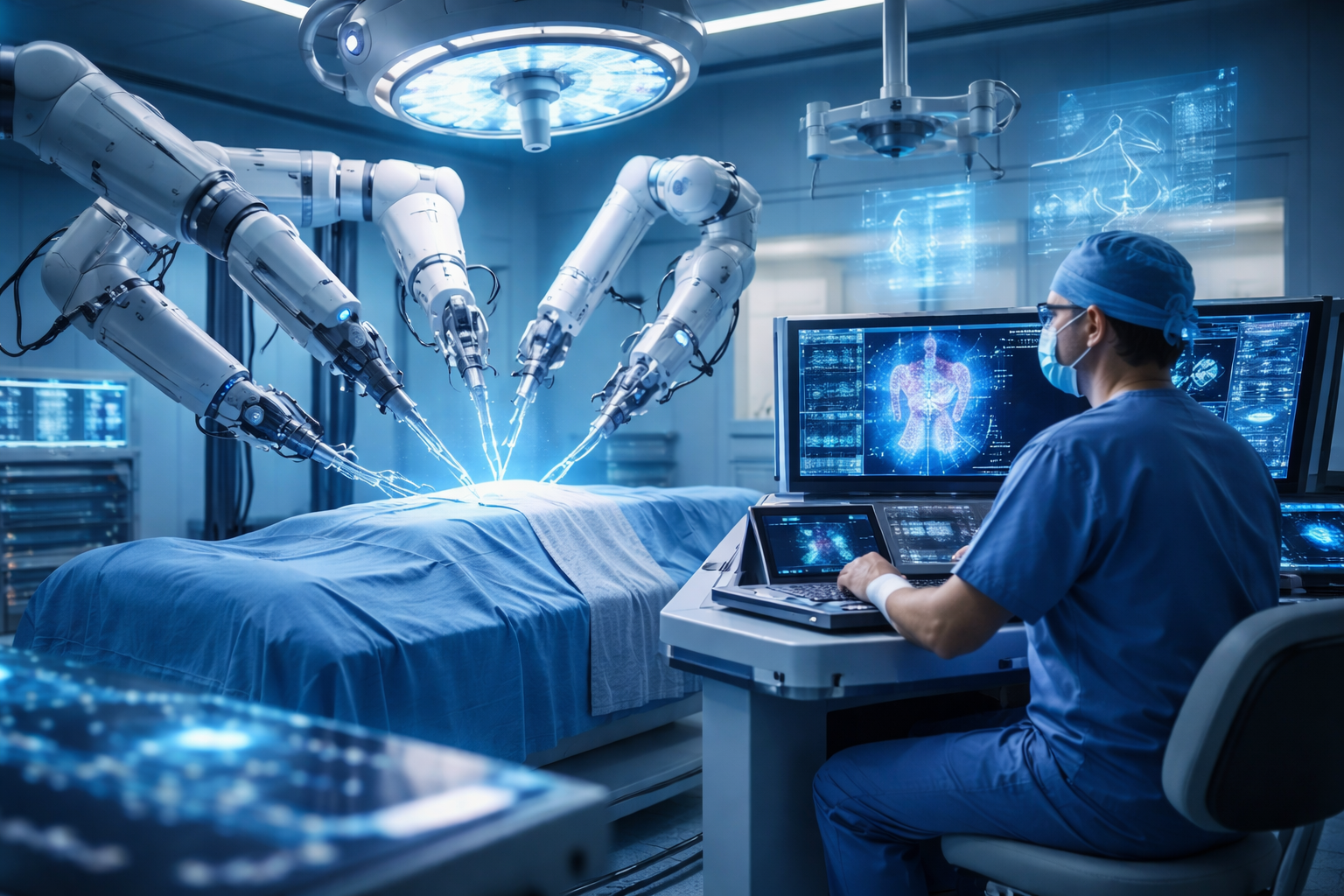
Surgical robotics allows doctors to perform complex procedures with enhanced precision, flexibility, and control. These systems translate a surgeon’s hand movements into smaller, more exact robotic motions, reducing human limitations like tremors.
Hospitals worldwide are adopting advanced robotic platforms such as da Vinci Surgical System developed by Intuitive Surgical.
The result is a new era of precision medicine powered by robotics.
What Is Surgical Robotics?
Surgical robotic systems typically include:
Robotic arms equipped with surgical instruments
A high-definition 3D camera system
A surgeon control console
Real-time data processing software
The surgeon remains in control at all times, guiding the robotic instruments with extreme precision.
Key Benefits
1. Minimally Invasive Procedures
Smaller incisions mean less trauma, reduced pain, and faster recovery times.
2. Enhanced Precision
Robotic systems filter out hand tremors and allow micro-movements beyond natural human capability.
3. Improved Visualization
High-definition 3D imaging provides magnified views of delicate tissues.
4. Reduced Hospital Stays
Patients often recover more quickly compared to traditional open surgery.
Common Applications
• Cardiac surgery
• Urology procedures
• Gynecological surgery
• Orthopedic operations
• General laparoscopic surgery
Robotic assistance is especially valuable in delicate or complex procedures.
Technology Behind Robotic Surgery
Surgical robots rely on:
Motion scaling algorithms
AI-assisted imaging analysis
Force feedback systems
Precision servo motors
Real-time control systems
Some next-generation systems integrate machine learning to assist in identifying tissue types and surgical landmarks.
Challenges
Despite major advantages, challenges include:
High equipment costs
Extensive surgeon training requirements
Maintenance expenses
Regulatory approvals
Access to robotic surgery may still be limited in smaller hospitals.
The Future of Surgical Robotics
Emerging innovations include:
AI-guided semi-autonomous procedures
Remote robotic surgery via high-speed networks
Miniaturized robotic instruments
Augmented reality surgical overlays
The long-term vision is safer, more efficient operations with even greater precision.
Conclusion
Surgical robotics represents one of the most impactful applications of automation technology.
By merging AI, engineering, and medical expertise, robotic systems are improving surgical outcomes and redefining modern healthcare.
