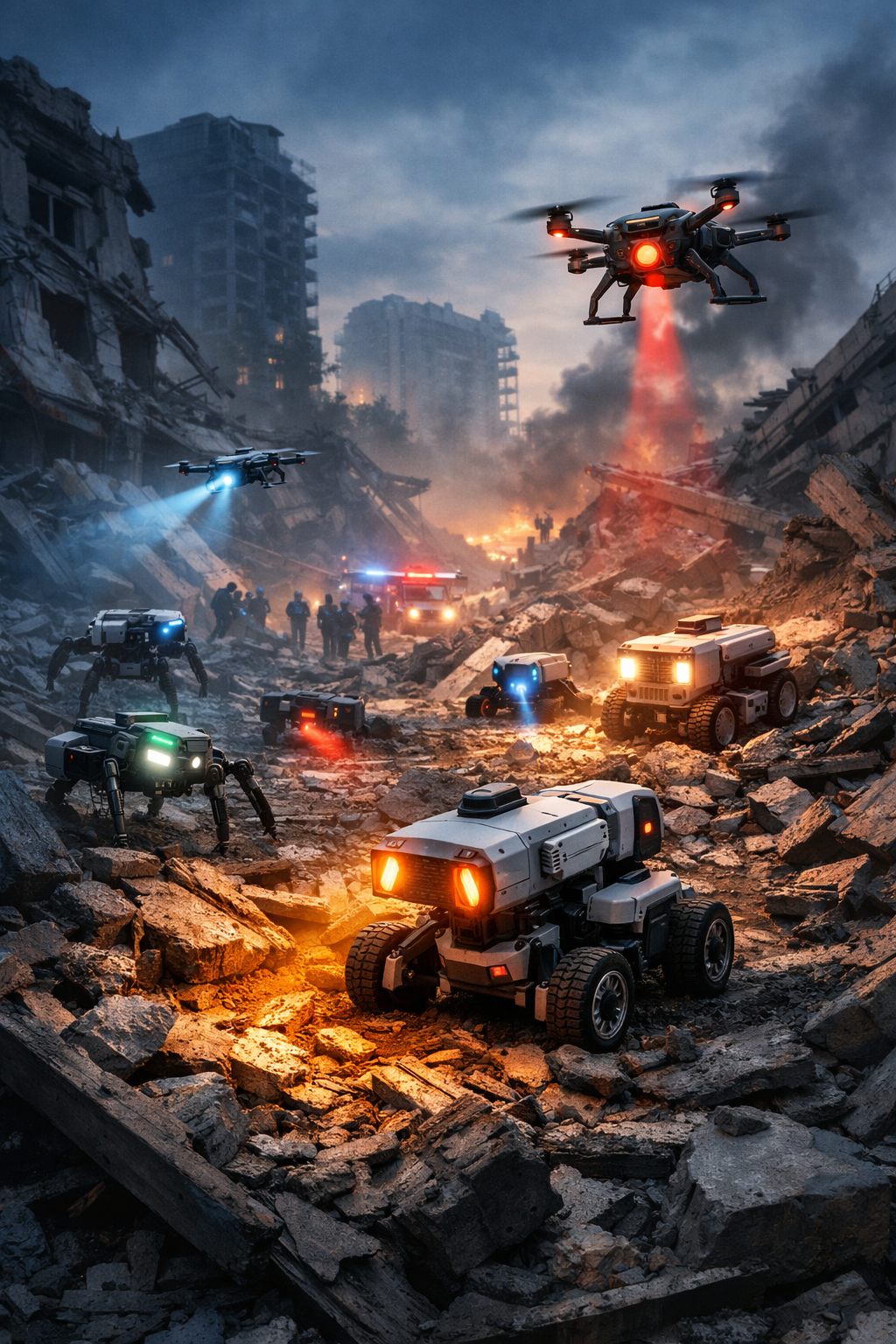
Introduction to Swarm Robotics
Swarm robotics is a technology where many small robots work together as a team. Instead of one large robot, a group of simple robots communicate and cooperate to complete tasks. This approach is inspired by nature, such as how ants or bees work together.
How Swarm Robotics Works
Each robot in a swarm follows basic rules and shares information with nearby robots. There is no single robot controlling the others. Because of this, the system continues to work even if some robots stop functioning.
Why Swarm Robotics Is Useful in Disasters
Disaster areas are often unsafe for humans due to collapsed buildings, fire, or toxic gases. Swarm robots can enter these dangerous places and collect important information without putting human lives at risk.
Search and Rescue Support
Swarm robots can search large areas quickly to find trapped or injured people. Using cameras, heat sensors, and sound detection, they help rescue teams locate survivors faster.
Damage Mapping and Area Analysis
Robots work together to create maps of disaster-affected areas. These maps help authorities understand the situation and decide where help is needed most.
Monitoring Fire and Dangerous Conditions
In fires or chemical accidents, swarm robots can monitor temperature, smoke, and harmful gases. This allows emergency teams to stay informed while keeping a safe distance.
Delivering Emergency Supplies
Some swarm robots or drones can deliver food, medicine, and communication devices to people trapped in hard-to-reach locations.
Benefits of Using Swarm Robotics
Swarm robotics offers fast response, wide area coverage, and high reliability. Even if one robot fails, others continue working, making the system efficient and dependable.
Challenges of Swarm Robotics
Swarm robotics still faces challenges like battery limitations, communication issues, and complex coordination. These problems are being improved with new technology.
Future of Swarm Robotics in Disaster Management
With advances in artificial intelligence and wireless communication, swarm robotics will become smarter and more effective. In the future, these robots will play a major role in saving lives during disasters.
Conclusion
Swarm robotics is changing how disaster management works. By using groups of intelligent robots, rescue operations become faster, safer, and more efficient. This technology has strong potential to improve emergency response in the coming years.
