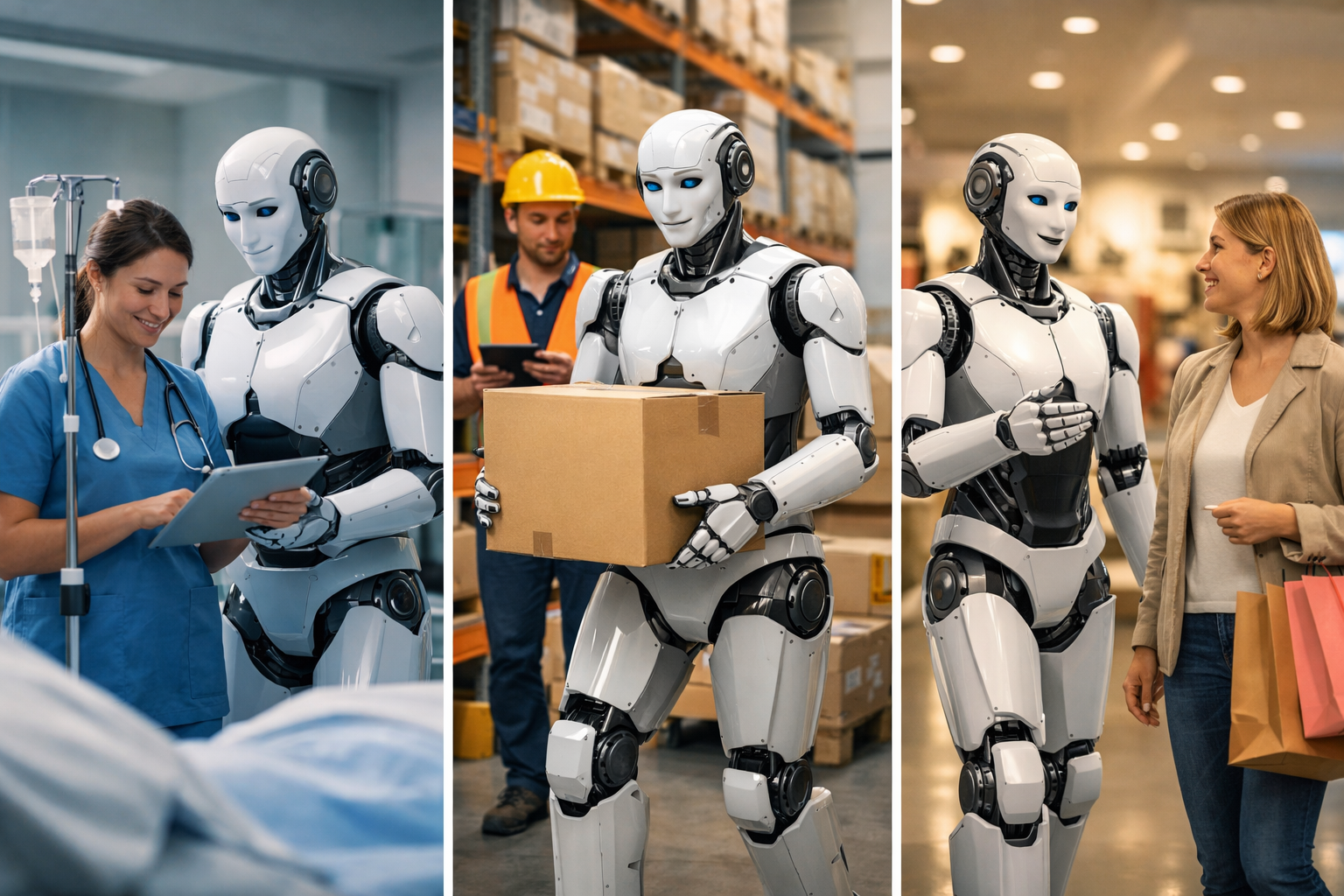
Humanoid robots are no longer just part of science fiction or research labs. Today, they are slowly becoming part of everyday life. With better technology and smarter AI systems, these robots are now being developed to work in real environments such as factories, hospitals, and public spaces.
What Are Humanoid Robots
Humanoid robots are machines designed to look and move like humans. They usually have a head, arms, legs, and a body structure similar to a person. This human-like design helps them move easily in places made for humans, such as offices, homes, and workplaces.
Why Humanoid Robots Are Becoming Popular
One major reason for the rise of humanoid robots is the improvement in artificial intelligence. Modern robots can now see, hear, understand commands, and make decisions. Businesses are also facing labor shortages and safety issues, which makes robots a helpful solution for repetitive and risky tasks.
How Humanoid Robots Are Used in Manufacturing
In factories, humanoid robots help with lifting heavy objects, assembling parts, and checking product quality. They can work alongside human workers and reduce physical strain. This improves productivity while keeping the workplace safer.
Role of Humanoid Robots in Healthcare
Healthcare facilities are using humanoid robots to assist patients and medical staff. These robots can help move patients, deliver medicines, and provide basic support. In elder care, humanoid robots also offer companionship and help with daily activities.
Use of Humanoid Robots in Retail and Customer Service
In retail stores and service centers, humanoid robots are used to greet customers, answer common questions, and guide visitors. Their human-like interaction makes customers feel more comfortable and improves the overall service experience.
Importance of Artificial Intelligence in Humanoid Robots
Artificial intelligence is the brain of humanoid robots. It allows them to recognize objects, understand human speech, and respond naturally. With AI, robots can learn new tasks and adapt to different environments, making them more useful in real-world situations.
Benefits of Using Humanoid Robots
Humanoid robots help businesses save time and reduce workload. They can perform dangerous or repetitive tasks without getting tired. They also improve safety and efficiency while working in environments designed for humans.
Challenges Facing Humanoid Robots
Even with advanced technology, humanoid robots still face challenges. High costs, battery limitations, and safety concerns are common issues. Ethical questions and regulations are also important factors that need attention as robots become more common.
Future of Humanoid Robots
The future of humanoid robots looks promising. As technology becomes more affordable and intelligent, these robots are expected to become common helpers in factories, hospitals, offices, and homes. They will play a key role in shaping the future of automation and smart living.
