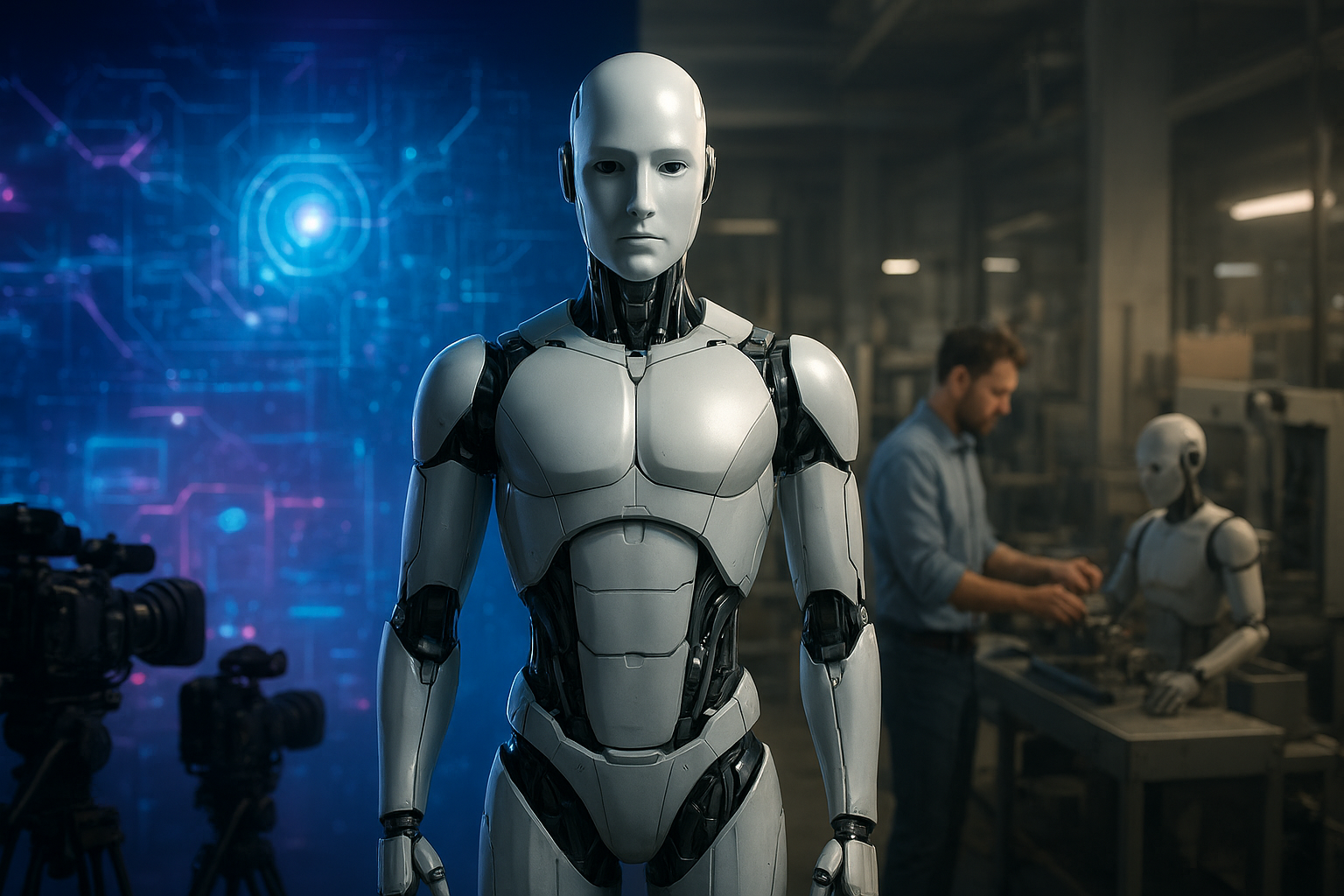
Humanoid robots are often shown in videos walking, talking, and acting like humans. These robots look impressive and futuristic, but many people wonder if they are actually useful in real life or just good for demonstrations. This article explains humanoid robots in simple terms and helps you understand what they can really do today.
Understanding Humanoid Robots
Humanoid robots are machines designed to look and move like humans. They usually have a head, two arms, and two legs. The main idea behind this design is to allow robots to work in places made for humans, such as offices, factories, hospitals, and homes.
These robots use artificial intelligence, cameras, sensors, and software to understand their surroundings and perform actions. However, they are still learning how to behave like humans naturally.
Why Humanoid Robots Get So Much Attention
Humanoid robots attract a lot of attention because they feel familiar and exciting. People naturally connect more with machines that look human.
Another reason is the rapid growth of artificial intelligence. AI makes robots smarter, allowing them to recognize faces, understand speech, and respond to commands. Also, many industries face worker shortages, so humanoid robots are often presented as future helpers for humans.
Social media and tech events also play a big role. Short videos showing robots walking or dancing create a strong impression, even though these robots may not be ready for everyday work.
Where Humanoid Robots Are Actually Useful Today
Humanoid robots already have some real-world uses, but mostly in limited areas.
In research and development, they help scientists test human movement, balance, and interaction with machines. This research improves future robot designs.
In controlled environments like factories or labs, humanoid robots can do simple tasks such as moving objects, checking equipment, or assisting workers.
They are also used in public places like malls, airports, and exhibitions as reception robots or guides. Their human-like appearance makes them engaging and helpful for basic communication.
In training and simulations, humanoid robots are useful for teaching healthcare workers, emergency responders, and engineers how to deal with real-life situations.
Limitations of Humanoid Robots
Despite their advanced appearance, humanoid robots still face many challenges.
They are very expensive to build and maintain. For most companies, simpler robots can do the same work at a much lower cost.
Humanoid robots also use a lot of energy, especially for walking and balancing. This makes them less efficient compared to wheeled or fixed robots.
Another major issue is limited intelligence. Most humanoid robots cannot think independently and still need human supervision or pre-programmed instructions.
Safety is also a concern. Since these robots work close to humans, even small errors can cause accidents.
Humanoid Robots Compared to Task-Specific Robots
Task-specific robots are designed to do one job very well, such as welding, packing, or lifting. These robots are faster, cheaper, and more reliable for specific tasks.
Humanoid robots are more flexible in theory, but in practice, they are slower and less efficient. Today, most industries prefer task-specific robots because they provide better results with less risk.
Future Potential of Humanoid Robots
The future of humanoid robots looks promising, but progress will take time.
As artificial intelligence improves, robots will become better at understanding language and making decisions. Advances in battery technology and materials will make them lighter and more energy-efficient.
In the future, humanoid robots may help in elderly care, disaster rescue, healthcare assistance, and service industries where human-like interaction is important.
Final Thoughts on Hype and Reality
Humanoid robots are not just science fiction, but they are not ready to replace humans or traditional robots yet. Much of the excitement around them is driven by marketing and demonstrations rather than everyday use.
Right now, humanoid robots are best seen as a technology for the future. As innovation continues, their real usefulness will slowly grow and match the hype.
